Reviewing the Custom Bunny Name Easter Design
As a designer who has spent countless hours digitizing and stitching out seasonal motifs, I approach every new machine embroidery design with a mix of curiosity and skepticism. The market is flooded with holiday graphics, but few translate well from screen to fabric. Recently, I evaluated the Custom Bunny Name Easter Design to determine if it holds up under the needle for real-world commercial and personal projects. This isn’t just about cute aesthetics; it’s about stitch integrity, visual balance, and usability for small business owners.
First Impressions and Visual Personality
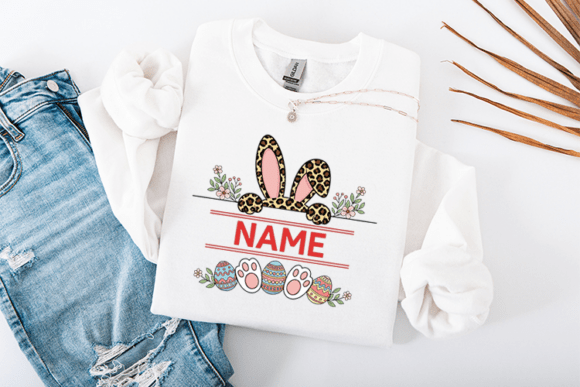
The immediate appeal of this design lies in its playful yet sophisticated composition. Featuring leopard print bunny ears, floral accents, and Easter eggs, it strikes a balance between trendy and traditional. For an embroidery project, the inclusion of leopard print is a bold choice that requires careful thread selection to avoid looking muddy. The layout is centered and symmetrical, which is ideal for maintaining balance on garments like sweatshirts or tote bags.
The mood is cheerful and spring-forward, making it a strong candidate for holiday embroidery collections. However, what matters most to us as practitioners is how these elements translate into stitches. The floral accents suggest a need for varied thread colors to create depth, while the name customization area implies a reliance on clean, legible lettering. If the default font is too thin, it may get lost in the texture of the fabric.
Real-World Application: The Tote Bag Test
To test the practicality of this digital embroidery file, I envisioned applying it to a canvas tote bag design. Canvas is a stable, medium-weight fabric that handles density well. In this scenario, the 12 x 12 inch maximum size allows for a prominent chest or center placement. The leopard print ears would require a satin stitch border to define the shape against the floral fill, ensuring the pattern doesn’t bleed into the background.
For Etsy sellers and craft business owners, this versatility is key. The design works equally well on a sweatshirt embroidery project, where the softness of fleece can complement the intricate details of the flowers. When used on a personalized gift like a baby blanket, the scale might need adjustment. While the provided files are high-resolution graphics (3600 x 3600 pixels), remember that vector formats like AI, EPS, and SVG are crucial for resizing without losing quality before digitizing or printing.
Navigating Fabric and Stitch Challenges
Not every fabric is created equal, and this design demands respect for fabric texture. On thin or stretchy materials, such as jersey knits for custom apparel, the density of the floral fills could cause puckering. Here, a cut-away stabilizer is non-negotiable. For woven fabrics like cotton twill used in embroidered patch creation, a tear-away stabilizer might suffice, but testing is essential.
One critical consideration is the leopard print effect. In embroidery, achieving a print look often involves complex color changes or specific fill patterns. If you are using this as a reference for digitizing, ensure your stitch density isn’t too high, which can perforate the fabric. Conversely, if you are using the provided JPG or PNG for sublimation or heat transfer alongside embroidery, the contrast must be sharp. Dark fabrics pose a challenge; the pastel tones typical of Easter eggs may vanish unless you use a white underlay or choose vibrant, contrasting thread colors.
Commercial Viability and Brand Consistency
For small shop product lines, consistency is currency. This design offers a cohesive look that can be adapted across various items, from aprons to pillow covers. The ability to customize the name adds significant value, transforming a generic holiday item into a cherished keepsake. Buyers engage more deeply with products that feel personal, and this design facilitates that connection.
However, professionalism hinges on execution. A poorly stitched name can ruin the appeal of even the cutest bunny. Ensure that the lettering portion of the design uses a font weight that matches the heaviness of the bunny ears. If the ears are bold and filled, the name should not be a delicate script that disappears. Use printable mockup tools to visualize the final finished product before committing to production runs. This helps in managing customer expectations and reducing returns.
Practical Designer Notes for Best Results
Before launching this design in your commercial embroidery lineup, follow these practical steps:
- Test on Scrap Fabric: Always stitch out a sample on the exact fabric type you intend to sell. Check for registration issues between the ears and the face.
- Check Thread Contrast: Leopard print requires at least three shades of brown or tan. Ensure your machine can handle frequent color stops without breaking thread.
- Review Hoop Size: While the design scales, ensure your hoop can accommodate the full 12 x 12 inch area if you plan to use it at maximum size. Smaller hoops may require splitting the design or reducing scale.
- Inspect Small Details: Zoom in on the floral accents. Are there tiny jumps or trims that could cause tangling? Clean up any unnecessary stitch paths if you are editing the digitized file.
- Verify Licensing: The product includes AI, EPS, PDF, SVG, JPG, and PNG files. Confirm whether the license allows for unlimited physical sales or if there are restrictions on digital redistribution. Never assume; always read the terms.
- Mockup in Black and White: Convert your preview to grayscale to check value contrast. If the design looks flat in black and white, it will lack depth in color.
Final Verdict for Makers and Sellers
The Custom Bunny Name Easter Design is a robust asset for those willing to pay attention to detail. It is not a "load and go" solution for beginners without some preparation, but for experienced apparel decorators and handmade product creators, it offers excellent potential. The combination of animal print and florals taps into current trends while remaining seasonally appropriate.
Whether you are creating baby embroidery for a new arrival or stocking up on holiday gifts for spring markets, this design provides a solid foundation. Just remember that the quality of the final item depends less on the graphic file and more on your choice of stabilizer, thread, and fabric. Treat it as a flexible design asset rather than a rigid template, and it will serve your craft business well.
By focusing on stitch clarity and material compatibility, you can elevate this graphic from a simple image to a high-value custom apparel piece. Keep your needles sharp, your tension balanced, and your creative vision clear.